


DCS history
DCS in 4 Key Milestones
DCS’ Early Years
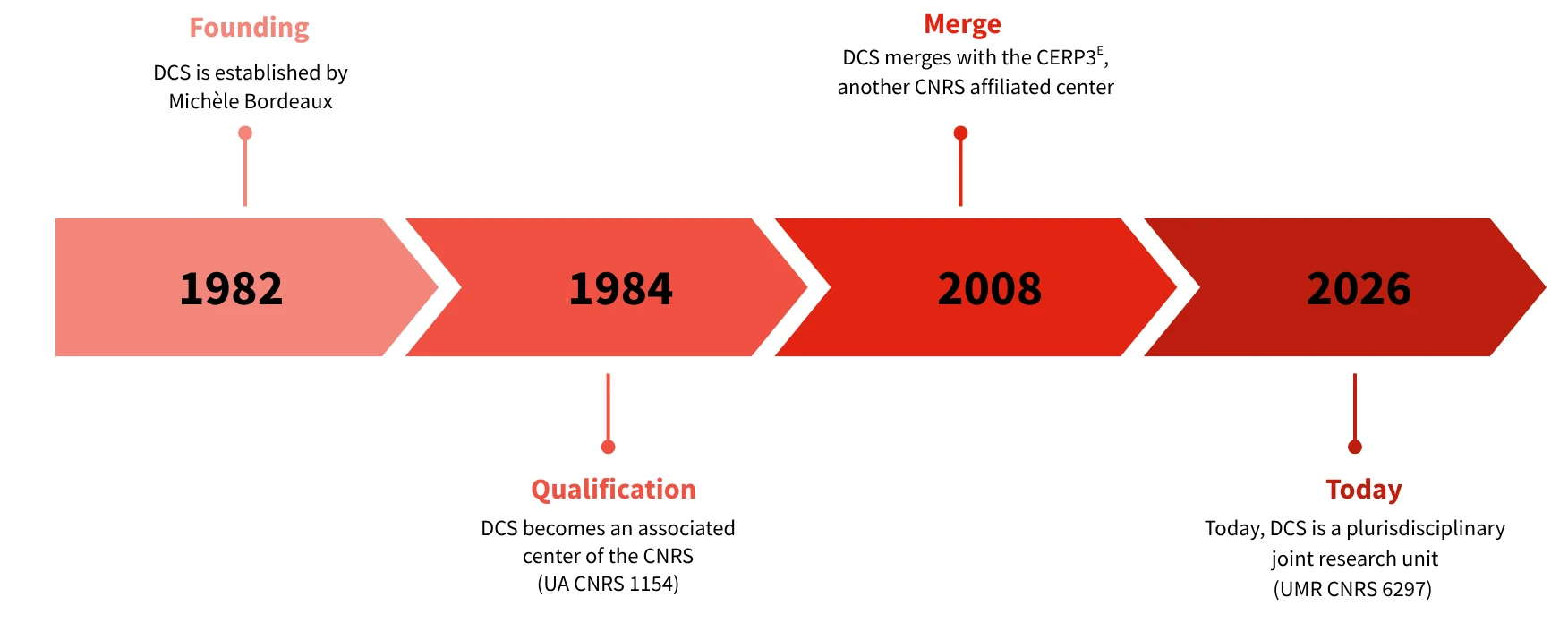
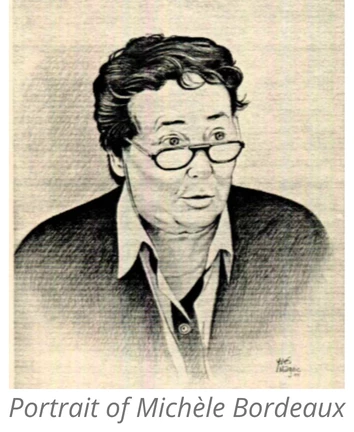
The Research center was established in 1982 under the name "Droit et Changement Social" (DCS), known in English as the Law and Social Change, by Michèle Bordeaux with one specific aim: studying the complex relationship intertwining social change and political decision-making translated by the Law.

DCS' first logo
In its early years as a research team, DCS was organised into two complementary centers:
• Laboratoire d’Histoire et Droit Social (Center for History and Social Law)
• Centre de Recherche Politique (Center for Political Research)
These two centers led specialized and transdisciplinary research with a focus on 4 core themes:
1. Social Changes and Labour Law (supervisor: Alain Supiot)
2. Law and rural transformation (supervisor: Louis Lorvellec)
3. Women, family and social change (supervisor: Michèle Bordeaux)
4. History of social protection and labour (supervisor: Philippe-Jean Hesse)
As early as 1984, DCS took a decisive step by becoming an associated unit of the CNRS (National Center for Scientific Research). The Unit continued to pursue its mission by exploring emerging issues such as new technologies or developments in criminal law.
Multidisciplinarity as a Core Mission
DCS has always striven to conduct multidisciplinary research, analysing law within its broader cultural and social context. Our team of experts across legal studies, sociology, economics or history have consistently collaborated on numerous joint research projects or grants.Among these collaborations, the project "Rape and violence against women: construction/deconstruction of the 'rape survivor' as a subject matter", led by Soizic Lorvellec, stood out for its innovative approach to the protection of women and the legal classification of rape. Following years of interdisciplinary collaboration between legal scholars, medical doctors, sociologists and psychologists, this research programme culminated in the publication of "Qualifié viol” (1990, Meridiens Klincksieck).
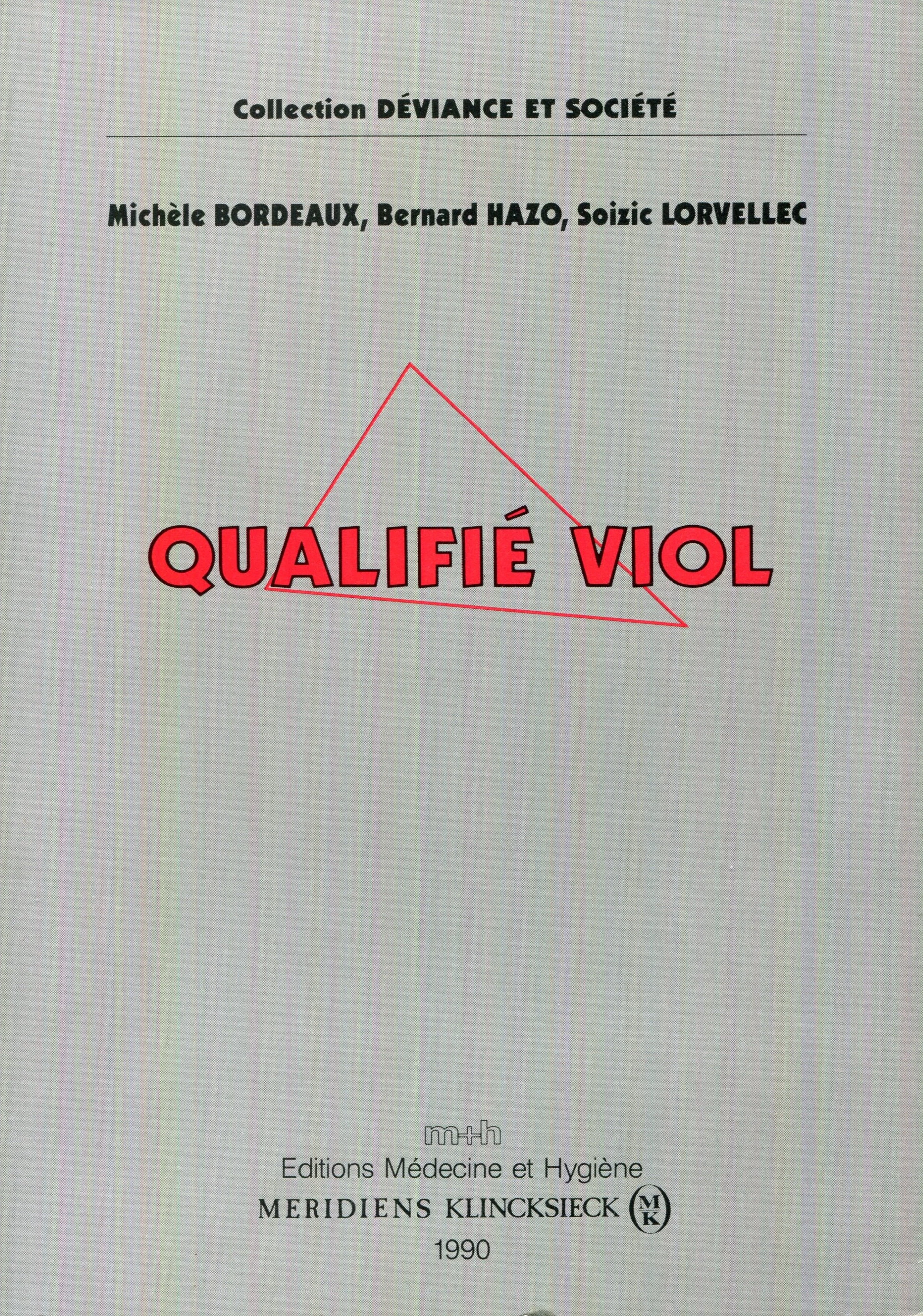
Qualifié Viol, Mediens Klincksieck, 1990
This open, interdisciplinary culture led DCS to become in 1993 one of the founding members of the Maison des Sciences Sociales et des Humanités (MSH) Ange Guépin (Institute for Social Sciences and the Humanities), spearheaded by its first director and DCS member Alain Supiot. In 1995, DCS also initiated a long-standing partnership with Céreq (Center for the Study and Research on Training), further consolidating its expertise in training and employment.
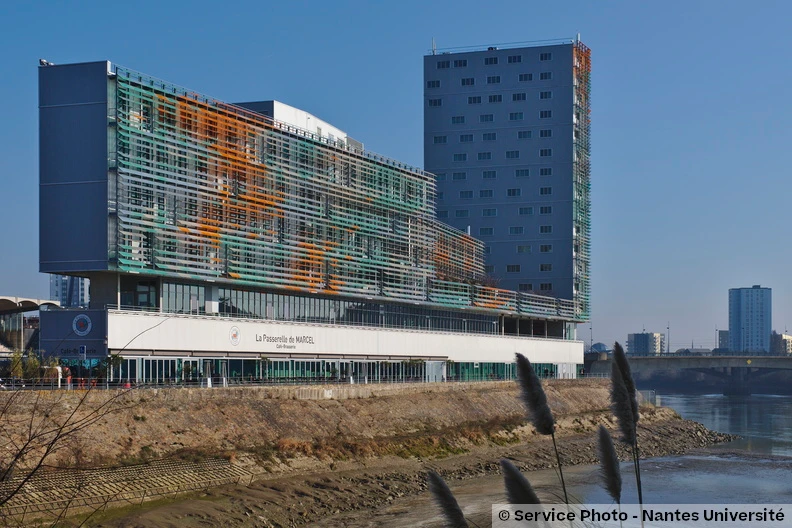
Institute for Social Sciences and the Humanities - Ange Guépin
An Ever-evolving Expertise
DCS has always sought to reflect upon contemporary societal challenges. In 1985, it established itself as a national reference by partnering with the Ministry of Justice on a transdisciplinary project led by Marie-Clet Desdevises entitled “Criminal record and vocational integration”.More broadly, DCS has contributed significantly to a wide range of fields : from the study of the electorate and maritime law to social protection, career transitions and labor mobility. Led by distinguished researchers such as Louis Lorvellec, Michèle Bordeaux, Pierre Cam, Alain Supiot or Jean-Pierre Le Crom, this research placed DCS at the forefront of social law.
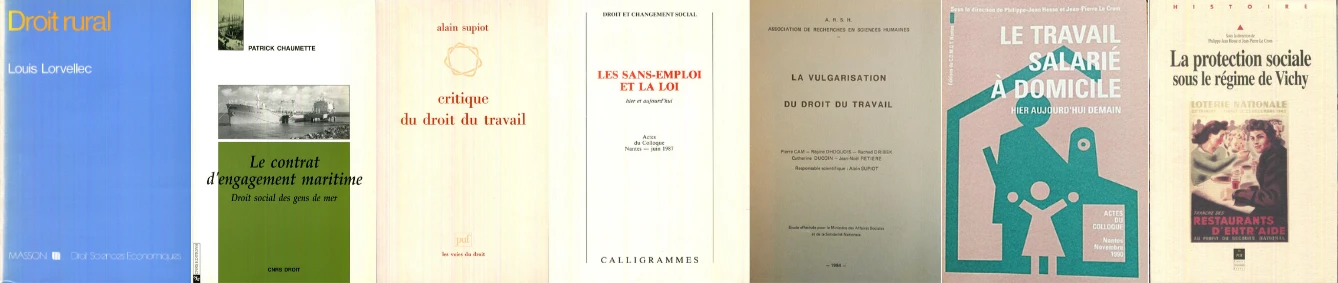
Books and reports published by DCS researchers in the XXth century
2008 : The Merger of Two Pillars of Nantes Academic Ecosystem
In 2008, DCS merged with the CERP3E (Center for the study of public policies on Space, Economy and the Environment – UMR CNRS 6029) to form a unified research unit. Under the joint leadership of Jacques Fialaire and Patrick Chaumette (Dputy Director), the unit retained the name "Droit et Changement Social" (UMR CNRS 3128) all the while welcoming in a new group of researchers specializing in public law.  THE CERP3E AT A GLANCE
Originally founded in 1972 as CRUARAP by Yves Prats, a pioneer of legal research in Nantes, CERP3E (UMR CNRS 6029) became a CNRS-affiliated unit in 1991. It gained national and international recognition in environmental law through the work of prominent scholars such as Luc and Maryvonne Bodiguel, Jacques Fialaire or Raphaël Romi.
The strength of this merger lies in its complementary methodologies:
• An internal approach: the dogmatic and doctrinal analysis of the rules of law
• An external approach: the evaluation of the practical enforcement of these rules and the examination of the interactions between national, European and international frameworks.
This union opened up new research horizons, including environmental law, land laws, administrative law and urban planning. DCS thus established itself as a comprehensive research hub spanning social, private and public law and national, European and international law.
• An internal approach: the dogmatic and doctrinal analysis of the rules of law
• An external approach: the evaluation of the practical enforcement of these rules and the examination of the interactions between national, European and international frameworks.
This union opened up new research horizons, including environmental law, land laws, administrative law and urban planning. DCS thus established itself as a comprehensive research hub spanning social, private and public law and national, European and international law.
DCS Today: Research Looking to the Future
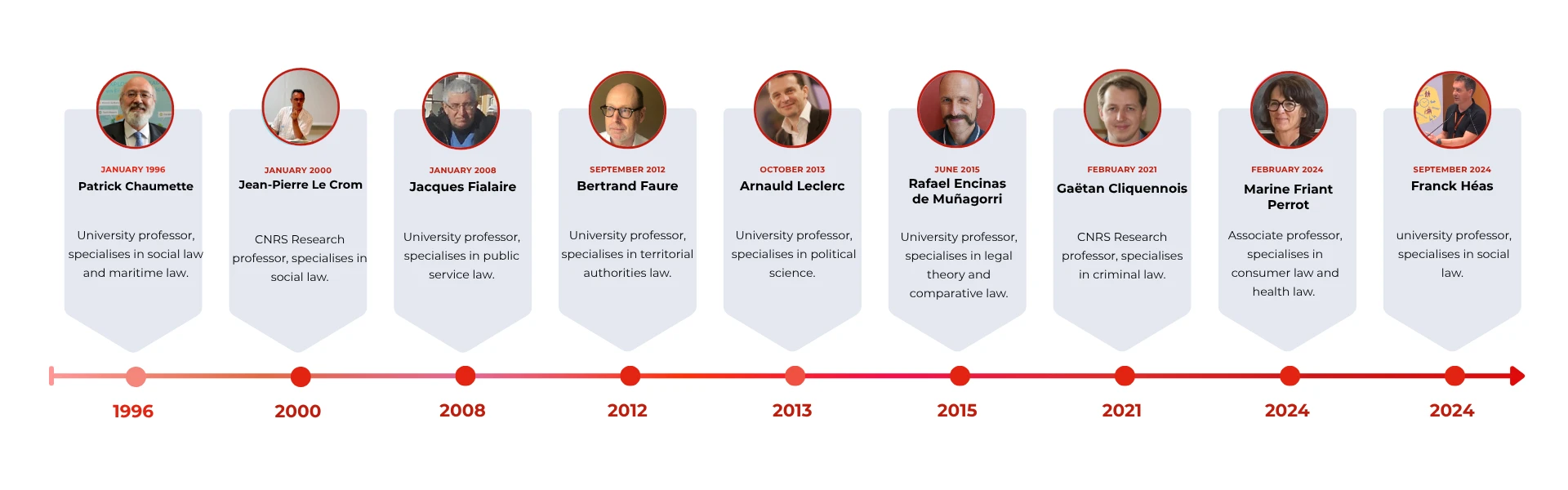
Following the successive directorships of Bertrand Faure, Arnauld Leclerc, Rafael Encinas de Muñagorri, Gaëtan Cliquennois and Marine Friant-Perrot, DCS is currently led by Franck Héas and Sonia Desmoulin (Deputy director). DCS' directors from 1996 up to today
 Today, DCS brings together over 160 members (including more than 60 PhD students), around a shared objective: gaining a deeper understanding of the role of law in societal transformations, with a focus on the sociocultural and political context. Research within the Unit is now structured around 6 autonomous research groups which collaborate and cooperate on numerous transversal research programmes.
 Our 6 Research Focus:
- Political and Legal Europe Within Globalisation (supervisors: A. Turmo et M. Rouyer)
- Ecological Changes & New Modes of Governance (supervisors: L. Bodiguel et S. Robert)
- Technological Innovation, Health and Biopowers (supervisors: M. Bernelin et M. Friant-Perrot)
- Justice(s), Practices, Societies and Freedoms (supervisors: N. Huten et J B. Masméjean)
- Labour, Employment and Social Policies (supervisors: P. Caillaud et C. Ledoux)
- Legal and Interdisciplinary Reflexivities (supervisors: M. Cardillo et T. Carvalho)
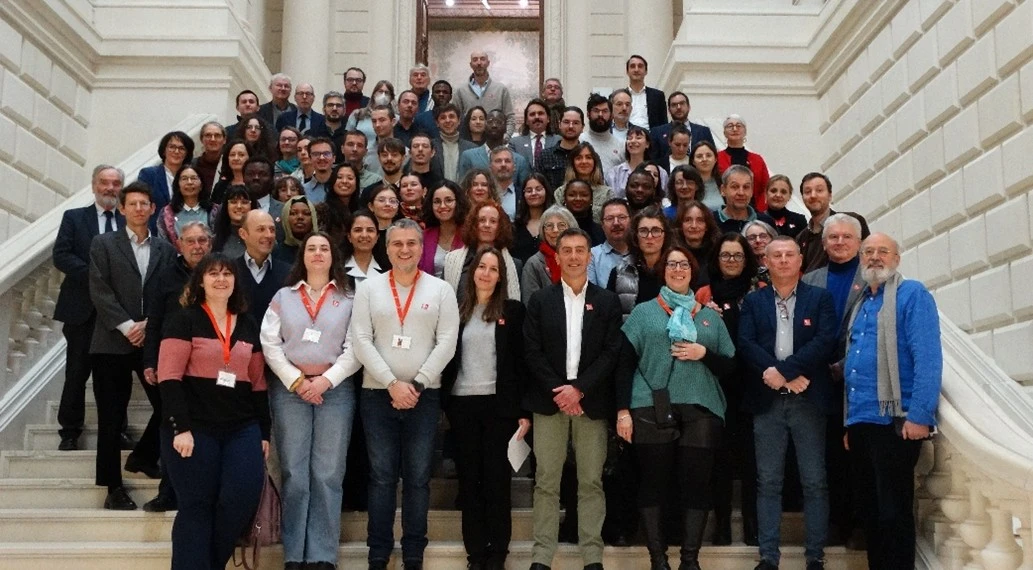
The DCS team for the Unit's 40th anniversary
Read also:
Updated on 15 October 2026.